Understanding Ambiguous ASD Test Results: A Clear Guide for Your Self-Discovery Journey
Taking an online ASD test can feel like a big step. You answer the questions, wait for the results, and hope for a clear answer. But what happens when the outcome is... ambiguous? If you've received a borderline or inconclusive score, you might feel more confused than when you started.
When test results are unclear, it's completely normal to feel a mix of anxiety and frustration. However, it's important to know that this is a common experience and not a dead end. An ambiguous result is simply a piece of information, and this guide is here to help you understand what it means and what to do next. This journey of self-discovery is unique for everyone, and a screening tool is just one part of it. At AsdTest.org, we provide a starting point with our preliminary ASD test, designed to offer initial insights.
This article will walk you through why screening tests sometimes produce unclear results, how to interpret them, and the practical steps you can take to find the clarity you deserve.
Why Your ASD Test Results Might Be Unclear
Online screening tests are valuable tools, but they are not the same as a formal diagnosis. They are designed to identify potential traits associated with Autism Spectrum Disorder (ASD). Understanding their limitations helps explain why results can sometimes be unclear.
The Scientific Basis of Screening Tools
Screening tools are built on scientific principles and often inspired by clinical questionnaires used by professionals. They work by comparing your answers to patterns commonly seen in autistic individuals.
These tools use a scoring system with "cutoff" points. If your score is significantly above a certain number, it suggests a high likelihood of autistic traits. If it's well below, it suggests a low likelihood. Ambiguous results happen when your score falls into a gray area—not high enough to be definitive but not low enough to rule anything out. This middle ground is where many people find themselves, and it simply means more exploration is needed.

How Personal Factors Affect Test Outcomes
Several factors can affect the outcome of an online screening, leading to inconclusive results. It’s not just about the questions, but also about the context in which you answer them.
- Co-occurring Conditions: Many people have traits that overlap with other conditions like ADHD, social anxiety, or sensory processing disorder. These can influence your answers and lead to a mixed result.
- Masking or Camouflaging: Many adults, especially women, have learned to "mask" their autistic traits to fit in socially. This can make it difficult to answer questions about your natural tendencies, potentially lowering your score.
- Personal State: How you felt during the test matters. Being tired, stressed, or distracted can impact your focus and how you interpret and answer questions.
- Individual Differences: Autism is a spectrum for a reason. Every person is unique. A screening tool is a standardized measure, and it may not perfectly capture the nuances of your individual experience.
Understanding Your Ambiguous ASD Screening Results
An unclear result isn't a final verdict. Instead, think of it as a signpost pointing you toward a deeper understanding of yourself. It highlights that you may have some autistic traits, even if they don't fit a simple, clear-cut pattern.
Interpreting Borderline Scores
A borderline score typically means you identify with some autistic characteristics but not others. This suggests your traits may be present, but perhaps less intensely or in different combinations than what a standard screening tool is designed to detect.
This doesn't invalidate your experiences. The concept of a "spectrum" means there is infinite variety in how autism presents. A borderline score can be an invitation to explore these traits further. It’s a signal that your unique neurotype is worth understanding, whether it ultimately leads to an autism diagnosis or not. Gaining these initial insights is a key first step, and our online ASD test is here to help with that exploration.
Analyzing Patterns in Your Results
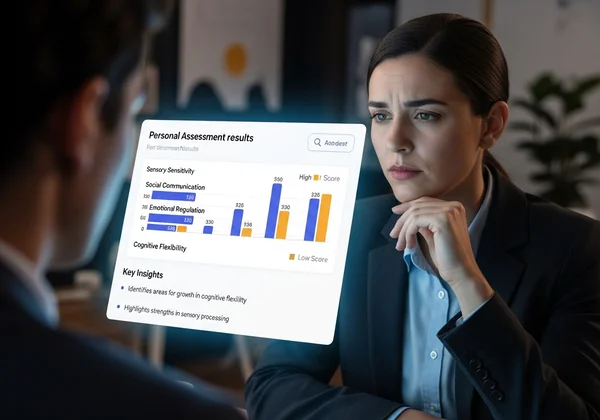
Sometimes, an inconclusive result comes from an uneven pattern of scores. For example, you might score very high in sections related to sensory sensitivities and repetitive behaviors, but low in areas of social communication.
This pattern is meaningful. It could indicate specific areas where you might need support, even if you don't meet the full criteria for an ASD diagnosis. For instance:
- High Sensory Scores: You might benefit from sensory-friendly environments or tools to manage sensory overload.
- High Social Communication Scores: You might find strategies for navigating social situations helpful, regardless of an official label.
Looking at these patterns can provide practical insights into your personal strengths and challenges, which is often more valuable than a simple yes-or-no answer.
Next Steps After Unclear ASD Test Results
Receiving an ambiguous result is not the end of your journey—it's the beginning of the next phase. You have several options for moving forward and gaining more clarity.
When to Seek Professional Evaluation
An online screening is just a starting point, not a formal diagnosis. Only qualified healthcare professionals—such as psychologists, psychiatrists, or developmental pediatricians—can provide an official diagnosis.
Consider seeking a professional evaluation if your traits are significantly impacting your daily life, work, or relationships. You might also consider this path if you feel a strong need for a definitive answer to understand your identity, or if you believe you need access to workplace accommodations or support services.
A professional assessment is a comprehensive process. It usually involves detailed interviews, observations, and multiple standardized tests. This in-depth approach can provide the clarity that a brief online screener cannot.
Alternative Approaches to Understanding Your Results
A formal diagnosis isn't the only path forward. Many people find value in self-exploration and community connection after an ambiguous screening result.
-
Keep a Journal: Spend a few weeks documenting your experiences. Note down social interactions that felt difficult, sensory issues you noticed, or times you relied on routines. This can reveal patterns that a one-time test might miss.
-
Learn from the Community: Read books, blogs, and watch videos created by autistic people. Hearing about their lived experiences can be incredibly validating and may help you see your own traits in a new light.
-
Try Another Screening: Different tools measure traits in different ways. Taking a different screening test after some time and reflection might provide additional perspective.
Your Journey Forward with Unclear ASD Screening Results
Getting ambiguous results from your ASD test might feel unsettling at first, but it's actually an opportunity for deeper self-discovery. Remember, these results don't define you. They are simply a tool to help you explore your unique way of experiencing the world.
As you move forward, remember these important points:
- Unclear results are common and influenced by many factors.
- They are not a dead end but an invitation to learn more about your traits.
- Your next step is your choice, whether it's seeking a professional evaluation, connecting with the autistic community, or simply continuing your self-discovery.
This journey is about finding what works for you and helps you live a richer, more authentic life. If you’re ready to take the first step or want to revisit your initial exploration, you can start your insightful ASD test on our platform today.
The Takeaway
What does it mean if my ASD test results are inconclusive?
An inconclusive or borderline result means your score falls into a gray area. It suggests you may have some autistic traits, but not enough for the screening tool to give a clear indication. It's not a "no," but rather a "maybe," signaling that further exploration is a good idea.
Should I still seek a professional diagnosis if my screening test was unclear?
If your traits are causing you distress or impacting your daily life, seeking a professional diagnosis is a reasonable next step. A professional can provide a comprehensive evaluation that goes far beyond what an online screening can offer. However, if you are simply exploring your identity, you may find that self-education and community resources are sufficient for your needs. An online screening like our free ASD test can help you decide.
Can I trust an ASD screening test that gives me borderline results?
Yes, you can trust it as a piece of information. A borderline result accurately reflects that your responses placed you in a middle range according to the test's scoring. Instead of viewing it as a failure of the test, see it as a reflection of the complexity of the autism spectrum and your own unique profile. It has successfully highlighted an area of your life that warrants more attention.