Non Verbal Autism Signs, Communication Support, and Next Steps
Non verbal autism is a common search term, but it can be misleading if it makes speech sound like the only form of communication. Many autistic people who use few or no spoken words still communicate through gestures, facial expression, body movement, vocal sounds, signs, typing, pictures, or communication devices. For families, educators, and adults trying to understand autism non verbal communication, the better question is not only "Will speech happen?" but "How can communication be recognized and supported now?" If you are exploring autism traits more broadly, a plain-language ASD screening overview can be a useful first step alongside professional guidance.
What Non Verbal Autism Means
"Non verbal autism" usually refers to an autistic person who does not use spoken language, uses only a few words, or cannot rely on speech consistently enough to express needs, thoughts, or feelings. Some clinicians and advocates prefer "nonspeaking" or "minimally speaking" because "nonverbal" can wrongly imply that a person has no language, no understanding, or no desire to interact.
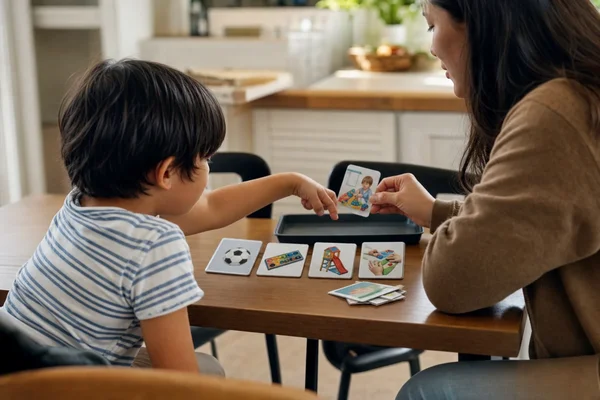
The distinction matters. Speech is one output method. Communication is broader. A child may pull an adult toward a snack, cover their ears when a room is too loud, hand over a favorite toy to request help, or use a picture card to ask for a break. An adult may type, use an AAC app, point, sign, or need extra time to respond. These are communication acts, even when spoken words are limited.
Non verbal autism is not a separate type of autism in the same way a medical subtype would be. It is a description of one part of a person's communication profile within autism spectrum disorder. The profile can change over time, and it can look different across home, school, therapy, community, and stressful situations.
Early Signs and Non Verbal Autism Symptoms
Early signs of non verbal autism often appear as differences in communication development rather than a single unmistakable symptom. A baby or toddler may use fewer gestures, point less often, show limited back-and-forth vocal play, respond inconsistently to their name, or have fewer attempts to share attention with another person. Some children babble or use a few words and then stop using them as often. Others understand routines and familiar phrases but struggle to express themselves clearly.
Common signs of non verbal autism in a toddler or young child may include:
- Few or no spoken words compared with developmental expectations
- Limited pointing, showing, waving, or other gestures
- Difficulty using eye gaze, facial expression, and body language together
- Frustration, crying, running away, or repetitive behavior when needs are not understood
- Strong preference for predictable routines or familiar communication partners
- Reliance on leading an adult by the hand, reaching, giving objects, or using sounds instead of words
These signs do not prove autism by themselves. Hearing differences, language disorders, motor-speech challenges, intellectual disability, anxiety, trauma, or other developmental differences can also affect speech. That is why a careful professional assessment is important when communication delays are significant, persistent, or paired with social, sensory, or repetitive behavior patterns.
What Causes Non Verbal Autism and What It Does Not Mean
People often search "what causes non verbal autism" because they want one clear explanation. In reality, autism is a complex neurodevelopmental condition with many possible genetic and developmental influences. Speech development is also complex. It depends on social communication, understanding, motor planning, hearing, attention, sensory regulation, opportunities to communicate, and the support available in daily environments.
Non verbal autism does not mean a person lacks intelligence. Some nonspeaking autistic people have intellectual disability, some have average or high reasoning ability, and some have abilities that are hard to measure because standard testing depends heavily on speech, speed, or compliance with unfamiliar tasks. A person may understand far more than they can express in spoken words. At the same time, it is not helpful to assume hidden advanced ability in every case. The most respectful approach is to presume capacity for communication, provide accessible supports, and observe what the person can do with the right tools.
It also does not mean speech is impossible. Some children develop spoken words later, some use speech for limited purposes, and others rely on AAC or other forms of communication throughout life. Families sometimes search "non verbal autism recovery," but progress is usually better understood as skill-building, support, access, and quality of life rather than a promise that autism or communication differences will disappear.

Communication Supports That Can Help
The goal of support is functional communication: helping the person express needs, choices, discomfort, interests, refusal, questions, and social connection. Speech therapy options for non-verbal autism often include work with a speech-language pathologist, but useful support should also involve caregivers, educators, and daily routines. Families can use an ASD self-reflection tool to organize observations before discussing patterns with a professional, while remembering that online screening is educational rather than a clinical decision.
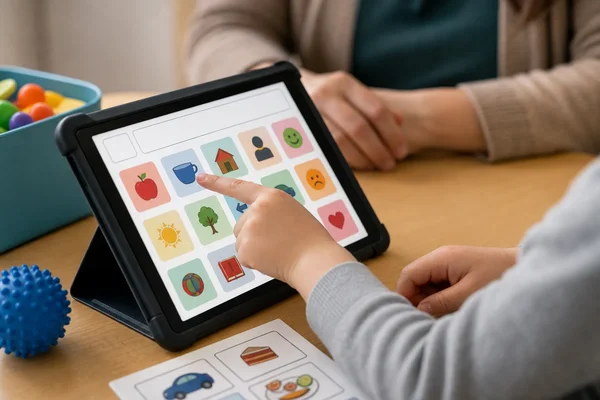
AAC, or augmentative and alternative communication, can include no-tech supports such as gestures and signs, low-tech tools such as picture cards and communication boards, and high-tech options such as speech-generating devices or tablet apps. A communication device for non verbal autism is not one-size-fits-all. The best option depends on motor skills, vision, language understanding, motivation, access needs, family routines, school support, and whether the person can use the system independently.
Helpful support often starts with everyday opportunities:
- Offer real choices, such as two snacks, two shirts, or two activities.
- Pause long enough for the person to respond with a look, reach, sound, sign, or device.
- Model the communication method without demanding perfect imitation.
- Label emotions and body needs in simple language.
- Use visual schedules or first-then boards to reduce uncertainty.
- Treat behavior as possible communication, especially when the same behavior appears in the same context.
AAC should not be treated as a last resort after speech fails. For many people, AAC reduces frustration and gives language a visible, repeatable structure. It can support speech for some users and remain the main communication method for others. The priority is not choosing between speech and AAC; it is making sure the person has a reliable way to be understood.
Non Verbal Autism in Adults
Non verbal autism in adults is often less visible in public discussion, but nonspeaking and minimally speaking autistic adults exist in families, workplaces, supported living settings, universities, advocacy spaces, and online communities. Some have used AAC for years. Some type fluently but need support with daily living. Some speak in familiar settings but lose reliable speech under stress, overload, illness, or emotional pressure.
Adults deserve the same respect given to any communicator: time to respond, direct conversation rather than being spoken over, access to preferred communication tools, and privacy around personal information. Supporters should avoid assuming that lack of speech means lack of opinion. They should also avoid treating every typed or prompted message as automatically reliable if the method depends heavily on another person's physical guidance. Independent access, clear authorship, and professional input matter when selecting communication methods.
For adults, practical supports may include written choices, quiet processing time, text-based appointments, AAC-friendly healthcare visits, workplace accommodations, sensory planning, and trusted communication partners who do not rush responses. The question is not whether an adult "counts" as communicative. The question is whether the environment gives them enough access to communicate safely and consistently.
What to Track Before You Seek Professional Support
If you are preparing for a pediatrician, speech-language pathologist, school team, psychologist, developmental specialist, or adult autism-informed clinician, concrete observations are more useful than a vague label. Track patterns over one or two weeks if possible.
Useful notes include:
- How the person requests help, comfort, food, activities, or a break
- Whether they understand familiar words, routines, pictures, signs, or written text
- Any sounds, words, scripts, echolalia, signs, gestures, typing, or picture use
- Situations that make communication easier or harder
- Sensory triggers, transitions, sleep changes, pain signs, or anxiety signs
- Skills that appear with one person but not another
- Frustration patterns and what helps the person recover
For school-age children, this information can support IEP goals for non-verbal students with autism. Strong goals focus on meaningful communication rather than only compliance. Examples might involve requesting a break, choosing between activities, answering yes/no in a reliable way, using a picture or device across settings, or initiating communication with a peer. The best goals are specific, measurable, useful in daily life, and built around the person's current access method.

When a Screening Tool Can Help You Reflect
Non verbal autism can feel overwhelming because it raises urgent questions about speech, learning, independence, school support, and long-term quality of life. A screening resource cannot answer all of those questions, and it should not replace a professional assessment. It can, however, help you organize what you are noticing: social communication patterns, sensory responses, repetitive behaviors, developmental history, and the next questions to bring to a qualified professional.
If you are trying to understand whether broader ASD traits may be part of the picture, ASDTest.org offers supportive ASD screening resources designed for education and self-reflection. Use the result as a starting point for discussion, not as a final label. For a nonspeaking or minimally speaking person, the most practical next step is usually not waiting for speech to appear. It is building communication access now, watching what helps, and seeking support from professionals who respect both safety and autonomy.
FAQ
Will a nonverbal autistic child ever speak?
Some nonspeaking autistic children develop spoken words later, some use a small amount of speech, and some continue to rely mainly on AAC, signs, gestures, typing, or other communication systems. No one can predict the exact path from a search query alone. The safer focus is early communication support, hearing and speech-language evaluation when appropriate, and consistent access to tools that help the child communicate now.
What are signs of nonverbal autism?
Signs may include few or no spoken words, limited gestures, difficulty combining eye gaze with communication, frustration when needs are not understood, limited back-and-forth interaction, and reliance on pulling, reaching, sounds, pictures, or devices. These signs should be interpreted in context because many developmental and communication differences can affect speech.
Can nonverbal autistic people read?
Some can read, some are learning, and some need adapted literacy instruction. Speech ability does not automatically reveal reading ability or intelligence. A person may be unable to speak but still recognize letters, understand written routines, use typed communication, or enjoy books. Others may need step-by-step literacy support matched to their communication and learning profile.
Is non-verbal autism severe?
Limited speech can indicate substantial support needs, but it does not tell the whole story. Some people with level 3 autism are nonspeaking and need very substantial support. Others may have uneven profiles: strong memory or visual skills alongside major communication and sensory needs. Severity should be understood through daily functioning, safety, communication access, learning profile, and support needs, not speech alone.
Is non verbal learning disorder the same as autism?
No. Nonverbal learning disorder, often called NVLD, usually refers to a learning profile involving challenges with visual-spatial, motor, or social interpretation skills despite stronger verbal ability. Non verbal autism refers to limited spoken communication in an autistic person. The names sound similar, but they describe different issues.
What is the best communication device for non verbal autism?
The best device is the one the person can access reliably and use across real situations. It might be picture cards, a communication board, sign language, a speech-generating device, a tablet app, typing, or a combination. A speech-language pathologist with AAC experience can help match the system to motor, sensory, language, and daily-life needs.