Next Steps After ASD Test: Finding the Right Professional
You have taken the first step by completing an online screening. Perhaps you have noticed certain traits in yourself or your child and wanted more clarity. Receiving your results can bring a mix of relief, confusion, or even anxiety. What should you do now that you have your scores?
Taking an asd test is a powerful way to begin your journey of self-discovery. However, a screening result is not the end of the road; it is a signpost pointing toward the next stage. This article will guide you through the process of moving from an online result to a professional evaluation. We will explore how to find the right experts and what to expect during a formal assessment.
Understanding the path ahead can make the process feel much less overwhelming. Whether you are looking for support for a toddler or seeking answers for yourself as an adult, knowing how to navigate the healthcare system is essential. Let’s look at how to turn your screening insights into a clear plan of action.

Understanding Your Online ASD Screening Results
Before you book an appointment with a specialist, it is important to process the information you already have. Online tools are designed to identify patterns and traits associated with Autism Spectrum Disorder (ASD). They provide a snapshot of where you or your child might sit on the spectrum at this moment.
If you haven't yet explored your unique traits, you can start your test to get an initial overview. Once you have those results, you can begin to look at the data with a more critical and informed eye.
What Do Your Scores Actually Mean?
A score on an ASD screening tool represents how many "autistic traits" were identified based on your answers. It is not a percentage of "how much" autism someone has. Instead, it measures the frequency or intensity of specific behaviors, such as social communication styles or sensory sensitivities.
High scores indicate your traits closely match ASD criteria. Low scores don’t rule out ASD entirely—your challenges might stem from other sources like anxiety or ADHD. If you chose a platform that offers an AI-generated report, you likely have more context regarding your specific strengths and challenges.
The Difference Between Screening and Diagnosis
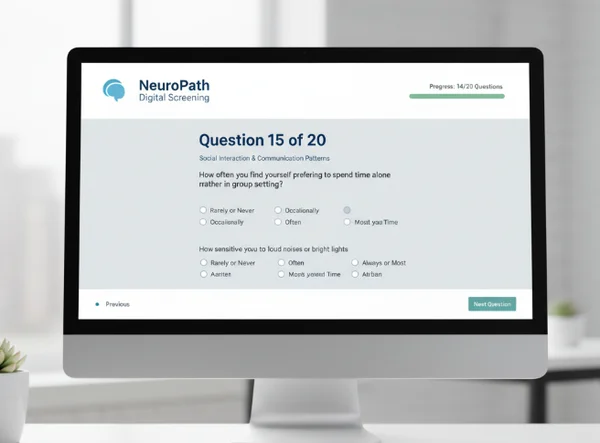
It is vital to remember that an online screening tool is not a medical diagnosis. Screenings are designed to be "inclusive," meaning they are sensitive enough to catch as many people as possible who might be on the spectrum. This helps ensure that no one who needs help is missed.
A clinical diagnosis, on the other hand, is a formal process conducted by a licensed professional. They use standardized observation tools, history-taking, and clinical expertise to confirm a diagnosis. While a screening tells you that you might be autistic, a diagnosis is a legal and medical recognition of your neurodivergence.
When to Seek Professional Evaluation
If your screening results indicate a high likelihood of ASD, or if your daily life is significantly impacted by social or sensory challenges, it is time to seek a professional. You do not need to wait for a "perfect" score to ask for help.
Many people seek a formal evaluation when they need access to specific services. This might include workplace accommodations, school-based support (like an IEP), or specialized therapy. For others, the goal is simply "peace of mind." If your online results have left you with more questions than answers, a professional can provide the depth you need.
Types of Professionals Who Conduct ASD Evaluations
The world of medical specialists can be confusing. Depending on your age and your specific concerns, you might work with one expert or a whole team. Understanding who does what will help you find the right entry point into the diagnostic system.
Developmental Pediatricians and Their Role
For parents of young children, a developmental pediatrician is often the first stop. These doctors specialize in the physical, emotional, and social development of children. They are experts at identifying developmental delays and distinguishing between different conditions.
A developmental pediatrician will look at your child's milestones, such as when they started speaking or how they play with others. They are particularly skilled at spotting early signs of ASD in toddlers. Because they are medical doctors, they can also rule out physical issues, like hearing problems, that might mimic ASD traits.
Clinical Psychologists vs. Neuropsychologists
Adults and school-aged children often see psychologists for an ASD screening test. A clinical psychologist uses interviews and behavior observations to make a diagnosis. They are excellent at understanding the emotional and behavioral aspects of autism.
Neuropsychologists focus on the relationship between the brain and behavior. They analyze brain functions like memory and decision-making. Choose a neuropsychologist if you seek clarity not just on whether you’re autistic, but how your brain operates.
Speech and Occupational Therapists in the Diagnostic Process
While they often cannot give a final diagnosis alone, Speech-Language Pathologists (SLPs) and Occupational Therapists (OTs) are crucial members of the diagnostic team. An SLP evaluates social communication, such as how a person uses eye contact or understands sarcasm.
An OT focuses on sensory processing and "activities of daily living." They might notice that a child struggles with certain textures or that an adult is easily overwhelmed by loud noises. Their detailed reports provide the evidence that psychologists and doctors use to make a final determination.
Choosing the Right Specialist for Your Needs
Not every doctor or psychologist is an expert in neurodiversity. Finding a specialist who is "neuro-affirming" is just as important as finding one with the right degree. You want someone who sees autism as a natural variation of the human brain, rather than something that needs to be "fixed."
Questions to Ask Potential Providers
When you call a clinic, do not be afraid to interview them. You are the consumer of their services. Start by mentioning that you have already taken an online asd test and want to follow up with a formal assessment.
Ask them questions like:
- How many ASD evaluations do you perform each month?
- What specific diagnostic tools (like the ADOS-2 or ADI-R) do you use?
- Do you provide a written report with actionable recommendations?
- What is the total cost, and what is the current wait time?
Evaluating Specialist Experience with ASD
Experience matters more than a title. Some general psychologists may only see one or two autistic patients a year. You should look for someone who lists "Autism Spectrum Disorder" or "Neurodevelopmental Disorders" as a primary area of expertise.
Check their website for the language they use. Do they mention "strengths-based" approaches? This is a good sign that they value the unique abilities of autistic individuals. You can also look for reviews in local support groups or online forums to see how other families or adults felt about their experience.
Considering Age-Specific Expertise (Child vs. Adult)
The way autism looks in a 3-year-old is very different from how it looks in a 35-year-old. If you are an adult, it is vital to find a specialist who understands "masking"—the way autistic adults often hide their traits to fit in.
Many pediatric clinics will not see adults, and many adult psychologists focus only on mood disorders like depression. Search specifically for "adult autism assessment" or "pediatric developmental specialist" to ensure the provider knows how to interpret the traits relevant to your stage of life.
Preparing for Your Formal ASD Evaluation
A formal evaluation can be a long and tiring day. Being prepared will help you stay calm and ensure the professional gets the best possible picture of your life. Think of yourself as a collaborator in this process.
Gathering Relevant Documentation and History
You will need to provide a "paper trail" of your life. For children, this includes school reports, notes from teachers, and records of developmental milestones. For adults, it helps to gather old school report cards or even speak to parents about your early childhood.
It is also helpful to bring your results from your asd screening. This provides the specialist with a starting point. Many people find it useful to keep a "trait diary" for a week or two before the appointment, noting down sensory sensitivities, social difficulties, or repetitive behaviors as they happen.
What to Expect During the Evaluation Process
A typical evaluation usually involves several hours of testing. This is not like a math test; there are no wrong answers. The specialist might ask you to tell a story from a picture book, complete puzzles, or participate in a conversation.
They will also spend time interviewing you (or the parents) about history and daily habits. They are looking at how you communicate, how you move, and how you react to the environment. While it can feel intrusive, remember that the goal is to give you the most accurate get insights possible.
How to Advocate for Yourself During Assessment
If you feel the specialist is missing something, speak up. If you are an adult who masks heavily, explain that while you can make eye contact, it is actually very exhausting for you. Don't try to "perform" or look "less autistic" during the test.
Don’t let evaluators dismiss you based on outward success. Many autistic people excel professionally yet face hidden struggles. Remind them autism spans a wide spectrum. Your lived experience is the most important piece of evidence in the room.
Your Path to Understanding Begins Here
Taking an online test is the beginning of a journey toward clarity and self-compassion. Whether your results lead to a formal diagnosis or simply help you understand your brain better, you have already done the hardest part: you started.
Remember that a diagnosis is not a label that limits you. Instead, it is a key that unlocks better support, more effective strategies, and a community of people who experience the world just like you do. Finding the right professional to validate your experience is a vital step in that process.
Your online ASD screening was just the beginning. Explore your unique traits further with our tailored reports, designed to help you navigate your next steps with clarity. Visit our online screening platform today to explore personalized reports and take the next step toward understanding your unique needs.
The Takeaway
How long does a formal ASD evaluation typically take?
A formal evaluation can vary in length. For children, it usually takes between 3 and 6 hours spread over one or two days. Adult assessments may be slightly shorter or longer depending on the complexity of the history. Most specialists will also spend several hours after the appointment writing a detailed report.
Will insurance cover the cost of an ASD assessment?
In many cases, health insurance will cover an evaluation for children if it is deemed "medically necessary." However, adult assessments are often not covered or require a specific referral. It is best to call your insurance provider and ask about "neuropsychological testing" benefits. You can also try our free tool to gather initial evidence to show your doctor.
Can I get an ASD diagnosis as an adult?
Yes, absolutely. More adults are seeking diagnoses now than ever before. Many people were "missed" as children, especially women and those with high-masking traits. A diagnosis in adulthood can be life-changing, providing a new perspective on years of feeling "different."
What's the difference between a school evaluation and a clinical diagnosis?
A school evaluation is used to determine if a child qualifies for special education services. It does not provide a medical diagnosis. A clinical diagnosis is performed by a medical professional and is recognized by healthcare providers and for insurance purposes. If your child has a school evaluation, it is still a good idea to start your test and seek a clinical assessment for a full picture.