Is ASD a Learning Disability: Unraveling the Differences and Overlaps
You might be watching a child who is brilliant with Lego blocks but struggles to read a simple sentence. Or perhaps you are an adult who has always felt socially out of sync, while also finding specific tasks like math or organization impossibly hard. It is natural to feel confused. Is this autism? Is it a learning disability? Or could it be both?
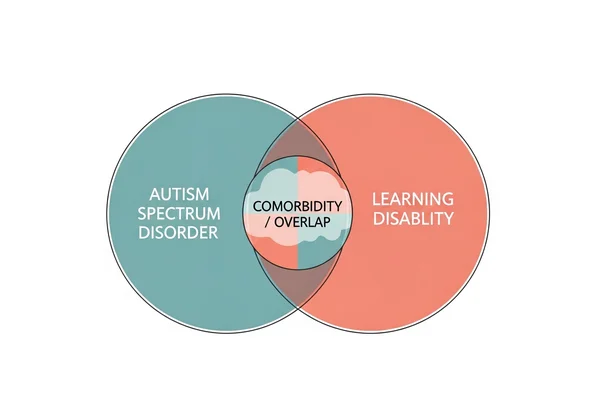
The short answer to "is asd a learning disability" is no—technically, they are separate categories. However, the reality is complex because they frequently overlap.
This guide will help you untangle these definitions. We will explore how symptoms mimic each other, why "comorbidity" (having both) is common, and actionable steps to find clarity.
The Core Verdict: Developmental Disorder vs. Learning Disability
To understand what you or your child are experiencing, we first need to look at how medical and educational professionals classify these conditions. While the struggles may look similar in a classroom or workplace, the root causes are different.
Defining Autism Spectrum Disorder (A Neurodevelopmental View)
Autism Spectrum Disorder (ASD) is classified as a neurodevelopmental disorder. This means it primarily affects how the brain develops and functions regarding social interaction, communication, and behavior.
The core traits of ASD usually involve:
- Social Challenges: Difficulty reading social cues, making eye contact, or understanding unwritten social rules.
- Restricted/Repetitive Behaviors: Stimming (hand flapping, rocking), intense interests in specific topics, or a strong need for routine.
- Sensory Sensitivities: Being over- or under-sensitive to sound, light, texture, or taste.
Defining Specific Learning Disabilities (An Academic Skill View)
A Specific Learning Disability (SLD), often just called a learning disability, is a neurological condition that affects the brain's ability to send, receive, and process information.
Unlike ASD, a learning disability specifically impacts academic skills. It is not about social awkwardness or sensory overload; it is about a gap between a person’s potential (intelligence) and their actual performance in areas like:
- Reading (Dyslexia)
- Writing (Dysgraphia)
- Math (Dyscalculia)
The Bottom Line: ASD is primarily about social/behavioral development, while a Learning Disability is primarily about cognitive/academic processing.
The "Double Diagnosis": Can You Have Autism and a Learning Disability?
This is where the confusion often lies. You might read the definitions above and think, "But my child has social issues and can't read."
Can you have autism and a learning disability at the same time? Yes. In fact, it is very common. This is known as "comorbidity" or "co-occurrence."
Understanding Comorbidity: The Statistics
Research suggests that a significant percentage of people on the autism spectrum also have a learning disability. Estimates vary, but studies often indicate that anywhere from 30% to 50% of individuals with ASD also have a diagnosable learning disability.
Because the overlap is so high, if you suspect one, it is usually wise to consider the other. You can start by trying to explore your neurodevelopmental traits to see if the pattern aligns more with ASD or strictly learning challenges.
Why Symptoms Blur: Executive Function & Processing Speed
Why do they look so similar? The culprit is often Executive Function.
Both autistic people and those with learning disabilities often struggle with executive function skills, which are the brain's "management system." When these skills lag, you might see:
- Difficulty planning and organizing tasks.
- Trouble shifting focus from one activity to another.
- Poor time management.
- Slow processing speed (taking longer to answer questions).
If a student doesn't turn in homework, is it because they have Dysgraphia (LD) and can't write, or because they have ASD and didn't understand the teacher's vague instructions? Often, it takes careful observation to tell the difference.
Sensory Processing vs. Learning Struggles
Another major source of confusion is sensory processing.
Imagine a child in a loud classroom.
- The LD View: The teacher might think the child has an auditory processing disorder or ADHD because they aren't listening.
- The ASD View: The child might actually be in sensory overload because the fluorescent lights are buzzing, making it physically impossible to focus on the lesson.
Understanding why the learning has stopped is key to finding the right solution.
Common Learning Disabilities That Co-occur with ASD
Since we know they overlap, which specific disabilities should you look out for? Here are the most common conditions found alongside autism.

Dyslexia and Hyperlexia (Reading Challenges)
Dyslexia involves difficulty connecting letters to sounds. An autistic person with dyslexia will struggle to read fluently.
However, some autistic children exhibit the opposite: Hyperlexia. This is a precocious ability to read words far above their age level, but with little to no comprehension of what they are reading. They decode perfectly, but the meaning is lost.
Dyscalculia (Math Processing Issues)
Dyscalculia affects the ability to understand number-based information. While some autistic individuals are gifted in math (a common stereotype), many others struggle significantly with abstract mathematical concepts, time estimation, and spatial reasoning.
The NVLD Connection: Non-Verbal Learning Disorder vs. ASD
Non-Verbal Learning Disorder (NVLD) is the condition most frequently confused with Level 1 Autism (formerly Asperger’s).
People with NVLD typically have:
- High verbal skills: They talk early and have large vocabularies.
- Poor visual-spatial skills: They are clumsy and get lost easily.
- Social difficulty: They miss non-verbal cues (body language).
Because the social awkwardness in NVLD looks so much like autism, getting a correct differential diagnosis is essential. The key difference is often that NVLD is driven by visual-spatial deficits, while ASD is driven by social-communication deficits and repetitive behaviors.
The Terminology Trap: Intellectual Disability vs. Learning Disability
If you are researching this topic online, you must be careful about where the information comes from. The terminology changes depending on your location.
- In the United States: "Learning Disability" refers to specific academic struggles (like Dyslexia) in someone with average or above-average intelligence. "Intellectual Disability" (ID) refers to a low IQ (typically below 70) and limitations in daily adaptive skills.
- In the United Kingdom: The term "Learning Disability" is used to describe what the US calls an Intellectual Disability. They use the term "Specific Learning Difficulty" for conditions like Dyslexia.
Clarifying the Question: When most people ask, "Is high-functioning autism a learning disability?", they are usually asking if it implies lower intelligence. The answer is no. By definition, "High-Functioning" Autism implies an average or above-average IQ.
Visualizing the Differences: Autism vs. Learning Disability Chart
To help you quickly distinguish between the two, here is a comparison of their primary features.
| Feature | Autism Spectrum Disorder (ASD) | Specific Learning Disability (LD) |
|---|---|---|
| Primary Area of Impact | Social communication & Behavior | Academic skills (Reading, Math, Writing) |
| Social Skills | Difficulty reading cues, making eye contact | Generally typical, unless caused by low confidence |
| Repetitive Behaviors | Common (Stimming, Routines, Special Interests) | Not a defining characteristic |
| Eye Contact | Often avoided or unusual | Typically normal |
| Language Development | May be delayed, echolalia (repeating words), or literal | Typically normal, unless LD is language-based (Dyslexia) |
| Motor Skills | Often issues with coordination (dyspraxia) | Often issues with fine motor (Dysgraphia) |
Moving from Confusion to Clarity: Screening and Next Steps
By now, you likely realize that the line between these conditions is blurry. You might recognize social traits in your child who is struggling to read, or you might see organizational chaos in your own life that feels like more than just "bad habits."
The Value of Structured Self-Reflection
Because symptoms overlap so heavily, relying on gut feeling isn't always enough. You can start by asking yourself three specific questions to help separate the issues.
Quick Self-Check: Ask Yourself These 3 Questions
- Is the struggle specific or global? (LDs are usually specific to tasks like reading/math; ASD affects social interactions and sensory processing globally).
- Is there a sensory component? (Does background noise or clothing texture make it impossible to think? This points towards ASD).
- Are there "unwritten rules" being missed? (LDs typically do not affect social intuition or the ability to read a room).
Educational Tool: Exploring Your Traits
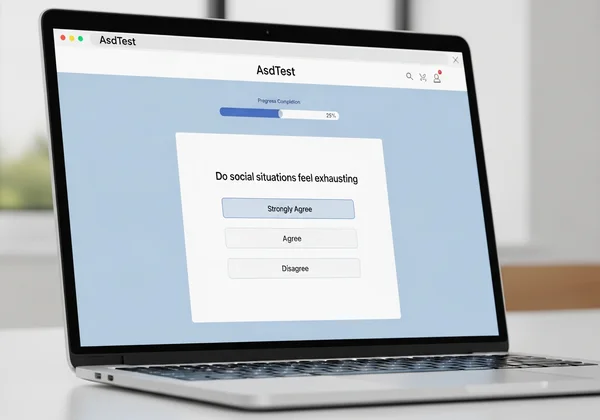
If your answers to the checklist above lean towards "global," "sensory," or "social," a screening tool can be a helpful next step. It is not a medical diagnosis, but it can highlight patterns you might miss.
Our comprehensive autism spectrum test is designed to assess the likelihood of ASD traits. By taking this assessment, you can see if the "learning struggles" you are noticing are actually part of a broader neurodevelopmental profile.
How Screening Results Help You Prepare
Taking a screener gives you a vocabulary. Instead of telling a doctor "something is wrong," you can say, "I scored high in social communication and sensory sensitivity." This helps professionals differentiate between a pure Learning Disability and Autism, leading to better support strategies like IEPs or 504 plans.
Embracing Neurodiversity and Finding Support
Whether the label is Autism, a Learning Disability, or both, remember that these are just terms to help you get the right support.
- If it is a Learning Disability: Interventions like specialized reading programs (Orton-Gillingham) or math tutoring can rewire the brain.
- If it is Autism: Support might focus on social skills groups, occupational therapy for sensory issues, or speech therapy.
- If it is Both: You will need a coordinated approach that respects the sensory needs while teaching the academic skills.

The goal isn't to "fix" the person, but to understand how their brain works so they can thrive. If you suspect these traits, we encourage you to start a preliminary screening to gain the insight you need to move forward.
Frequently Asked Questions
Is high-functioning autism considered a learning disability?
No. High-functioning autism (formerly Asperger's) is a neurodevelopmental disorder. People with this diagnosis typically have average or above-average intelligence. However, they may still have a co-occurring specific learning disability, like dyslexia.
Can ADHD be mistaken for a learning disability or autism?
Yes, frequently. ADHD affects focus, impulse control, and executive function. A child with ADHD might fail math not because they don't understand the numbers (Dyscalculia), but because they cannot sustain the attention to finish the problem. ADHD is also highly comorbid with both ASD and LDs.
Is autism considered a mental illness?
No. Autism is a neurodevelopmental condition, meaning the brain developed differently. It is not a mental illness like depression or schizophrenia, though autistic people can experience mental health challenges due to the stress of navigating a neurotypical world.
Does an autism diagnosis automatically qualify a child for an IEP?
In the US public school system, a medical diagnosis of autism does not automatically guarantee an IEP (Individualized Education Program). The condition must be shown to adversely affect the child's educational performance. However, autism is one of the 13 eligibility categories under IDEA, making it much easier to qualify for services than without a diagnosis.