Autistic Masking: 7 Signs to Know Before Your ASD Test
Do you often feel utterly exhausted after social events, as if you’ve been playing a role all day? Do you feel like you're constantly monitoring your every word and action just to fit in? This feeling of performing, of hiding your true self behind a carefully constructed facade, has a name: autistic masking. For many adults on a journey of self-discovery, understanding this concept can be a life-changing revelation. What are the signs of autism in adults that might be hidden by masking?
This guide will explore the world of autistic masking, from its subtle signs to its profound impact on mental well-being. Recognizing these patterns can be the first step toward self-understanding, acceptance, and a key reason individuals seek out an asd test for adults. If this experience sounds familiar, exploring it further with a preliminary online ASD screening can offer valuable clarity.
Understanding Autism Masking: More Than Just 'Fitting In'
Autistic masking, also known as camouflaging, is the conscious or subconscious suppression of natural autistic traits to appear more "neurotypical" in social situations. It's far more complex than simple politeness or wanting to make a good impression. It is a deep-seated survival strategy developed to navigate a world not always designed for neurodivergent minds. This process can be so ingrained that many people don't even realize they're doing it until they reach a point of burnout.
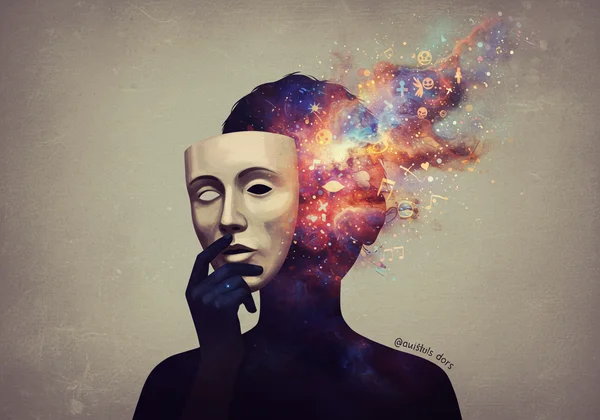
What does it mean to mask autism traits?
Masking autism traits involves actively learning and performing neurotypical social behaviors that don't come naturally. This can mean forcing eye contact even when it feels intensely uncomfortable, mimicking the facial expressions and body language of others, or suppressing repetitive movements known as stimming. It's like running a constant, resource-intensive social software in the background of your mind, translating every interaction in real-time. This effort, while aimed at connection, often leads to a profound sense of disconnection from one's true self.
Why do autistic people feel the need to mask?
The motivation to mask often stems from years of social feedback. Autistic individuals may have been bullied, misunderstood, or corrected for their natural behaviors from a young age. This leads them to believe that their authentic self is socially unacceptable. The desire for social acceptance, the need to secure employment, or the simple wish to avoid negative attention are powerful drivers. Masking becomes a tool for survival, a shield against judgment and exclusion in a world that often prizes conformity.
Masking vs. Code-Switching: Is there a difference?
While both involve adjusting one's behavior, there's a key distinction. Code-switching is typically a conscious choice to shift language, style, or expression to fit a different cultural context, often without losing one's core sense of self. Autistic masking, however, often involves suppressing one's fundamental identity and innate ways of processing the world. It’s less about adapting to a group and more about hiding a part of who you are, which can carry a much heavier psychological weight over time.
7 Common Signs of Masking Autism
Recognizing masking can be difficult because, by its very nature, it's designed to be invisible. However, certain patterns of thought and behavior can be strong indicators. If you identify with several of the following signs, it may be a signal that you've been expending significant energy to camouflage your authentic traits. An ASD self-test can be a valuable next step in your exploration.
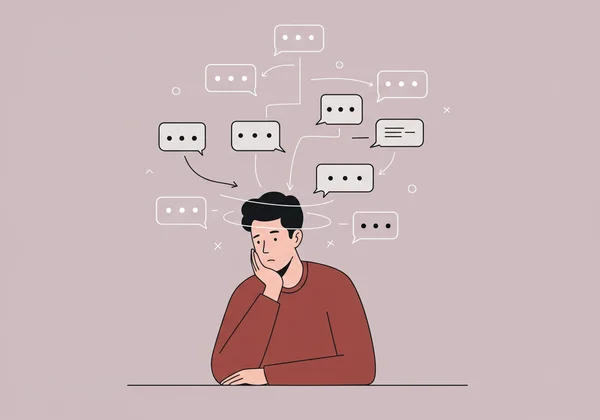
Constantly Mimicking Social Cues (Scripting & Mirroring)
This involves watching others in social situations and copying their gestures, phrases, and tone of voice to blend in. You might have a mental library of "scripts" for common interactions like ordering coffee or making small talk. Mirroring is the real-time imitation of another person's body language to appear engaged and "normal," even if you feel disconnected internally.
Forcing or Faking Eye Contact
Many autistic individuals find direct eye contact overwhelming, distracting, or physically uncomfortable. Masking this involves forcing yourself to maintain eye contact for a duration that feels socially appropriate. You might develop tricks, like looking at the bridge of a person's nose or their eyebrows, to give the illusion of eye contact without the intense sensory input.
Hiding or Suppressing Stimming Behaviors
Stimming (self-stimulatory behavior) includes repetitive movements like hand-flapping, rocking, or fidgeting, which are natural ways for autistic people to regulate their emotions and sensory systems. Masking involves actively suppressing these urges in public. Instead, you might adopt more socially acceptable, smaller-scale fidgets, like clicking a pen or tapping your foot, to release that energy discreetly.
Rehearsing Conversations Before They Happen
Do you mentally practice conversations over and over, planning out what you’ll say and how others might respond? This intense preparation is a common masking technique used to reduce the anxiety of spontaneous social interaction. While everyone prepares for important events, this often applies to everyday encounters, turning a simple phone call into a stressful performance.
Hiding Special Interests to Seem 'Normal'
Autistic people often have deep, passionate interests in specific topics. Masking can involve downplaying or completely hiding these interests for fear of being seen as "weird" or "obsessive." You might avoid talking about what you truly love and instead feign interest in more mainstream topics like sports or pop culture to participate in conversations.
Pushing Through Sensory Overload
The world can be a place of intense sensory input for autistic individuals. Bright lights, loud noises, strong smells, or certain textures can be physically painful and overwhelming. A key part of masking is ignoring or pushing through this sensory overload to avoid drawing attention to your distress. This often leads to meltdowns or shutdowns later in private.
Creating a 'Persona' for Different Situations
This is the culmination of all other masking behaviors: developing a carefully curated public persona. This character is often friendly, outgoing, and agreeable—whatever is needed to navigate the situation smoothly. The cost is high, as maintaining this persona is incredibly draining and can leave you feeling like no one knows the real you, which is a core element of weakening your true sense of identity. If this resonates, taking an online test for adult ASD can be a powerful step toward understanding these feelings.
The Hidden Toll: How Masking Impacts Mental Health
While masking can feel necessary for survival, it comes at a significant cost to mental and emotional health. The constant effort of suppressing your true self is unsustainable and often leads to serious consequences. Understanding this toll is crucial for recognizing why unmasking and self-acceptance are so important.
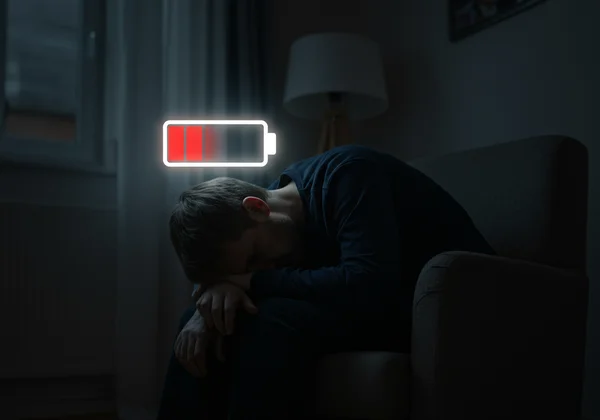
Leading to Autistic Burnout and Chronic Fatigue
Imagine holding a heavy weight above your head all day, every day. That’s what masking feels like. This chronic expenditure of mental energy inevitably leads to autistic burnout, an intense state of physical, mental, and emotional exhaustion. It's more than just feeling tired; it can result in a loss of skills, increased sensory sensitivity, and an inability to cope with daily life. This experience of burnout is a common theme discussed by those who later receive high scores on a preliminary asd test.
Increasing the Risk of Anxiety and Depression
Living a life that is not authentic creates a constant, underlying current of anxiety. There's the persistent fear of being "found out" or of your mask slipping. This disconnect from your true self, combined with the loneliness of feeling misunderstood, is a significant contributor to the high rates of anxiety and depression within the autistic community. Exploring your traits through an asd screening test can be a supportive step.
Weakening Your True Sense of Identity
When you spend most of your life pretending to be someone else, it can become difficult to know who you really are. Long-term masking can erode your sense of identity, leaving you feeling hollow and unsure of your own needs, desires, and values. The journey of unmasking is often a journey of rediscovering and reconnecting with that authentic self you've kept hidden for so long, a realization that often follows a clarifying asd test.
Your Journey to Unmasking and Self-Understanding
Recognizing yourself in the signs of autistic masking is a powerful and validating first step. It is not a label of failure but an acknowledgment of the incredible strength it has taken to navigate the world. This new understanding opens the door to self-compassion and the possibility of living more authentically.
Your journey is unique, and taking it at your own pace is essential. If these experiences resonate with you, it may be time for deeper insight. Our free, confidential online ASD screening is not a diagnosis but can be a valuable tool in understanding your unique traits. Start your test today and take a meaningful step on your path to self-discovery.

Frequently Asked Questions About Autistic Masking
Am I autistic or just socially awkward? (How an ASD Test Can Help)
While many people experience social awkwardness, autistic masking often involves a much deeper and more exhausting process of manually calculating social rules, suppressing natural instincts, and recovering from sensory overload. If your social challenges are paired with intense fatigue, sensory sensitivities, and a lifelong feeling of being fundamentally different, it may be worth exploring further. An online asd test can help provide initial clarity.
Is autistic masking a conscious choice?
It can be both. For some, it starts as a conscious effort to avoid negative reactions. Over time, it can become so automatic that it feels subconscious—simply the "way you are" in public. Many adults don't realize the extent of their masking until they learn the term and begin to consciously notice their own behaviors.
Can unmasking help with autistic burnout?
Yes, absolutely. Unmasking allows you to conserve the immense energy previously spent on suppression. By allowing yourself to stim, honoring your sensory needs, and engaging with the world more authentically, you reduce the cognitive load that leads to autistic burnout. It's a gradual process, but it is fundamental to long-term well-being.
What are the first signs of autism in adults?
For many adults, especially those who mask heavily, the first signs are not always obvious behaviors but internal experiences. These often include chronic social exhaustion, difficulty with small talk, feeling like an "alien" pretending to be human, intense and specific interests, and struggling with sensory sensitivities. Recognizing these internal patterns is often the key that unlocks the door to self-understanding and can be explored further with a preliminary asd test.