Autism & Sensory Processing: Understanding ASD Beyond the 5 Senses
For many, the world is experienced through a familiar filter of five senses: sight, sound, smell, touch, and taste. But for individuals on the autism spectrum, this sensory landscape can be profoundly different—a world of intensified details, muted signals, and unique perceptions. If you've ever wondered about these differences in yourself or a loved one, you've likely asked, How do I know if I'm autistic? Understanding sensory processing is a crucial piece of that puzzle. An initial asd test can often be the first step toward exploring these traits and gaining valuable personal insights.
Sensory differences are not just a minor quirk; they are a core characteristic of Autism Spectrum Disorder (ASD). They shape how an autistic person interacts with their environment, communicates, and manages their emotional state. Exploring this topic helps build empathy and provides practical strategies for support. Whether you're a parent trying to understand your child's needs or an adult exploring your own identity, this guide will illuminate the rich and complex world of sensory processing in autism. For those seeking a starting point in their journey, a preliminary screening tool can offer clarity.
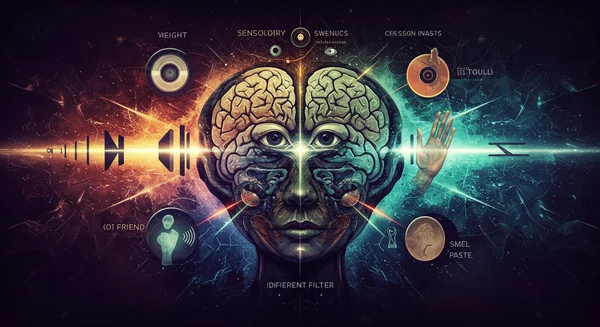
Understanding Autism Sensory Issues: Hypersensitivity & Hyposensitivity
One of the most common discussions around autism involves sensory sensitivities. These experiences typically fall into two categories: being over-responsive (hyper) or under-responsive (hypo) to sensory input. Many autistic individuals experience a mix of both, sometimes even within the same sense. This dynamic interplay explains why a person might be distressed by a quiet background hum yet seek out loud, intense music.
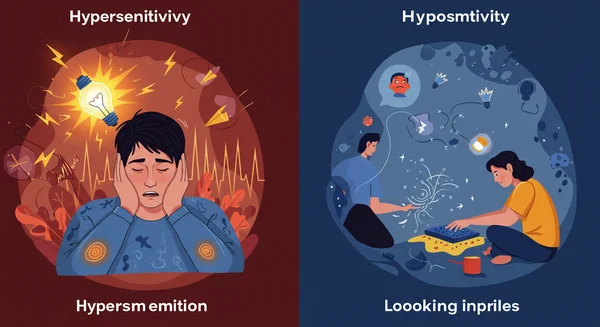
When Too Much Is Too Much: Navigating Hypersensitivity in ASD
Hypersensitivity, or being over-responsive, means that sensory information can feel overwhelming. It's like having the volume of the world turned up to its maximum setting. This can lead to a state of sensory overload, where the brain becomes overwhelmed and unable to process the constant stream of input. This experience is a common reason for distress and meltdowns.
Common examples of hypersensitivity include:
- Auditory: Finding everyday sounds like a vacuum cleaner, chewing, or fluorescent lights painfully loud or distracting.
- Visual: Being disturbed by bright lights, flickering screens, or visually "busy" patterns.
- Tactile: Feeling discomfort from clothing tags, certain fabrics, light touch, or specific food textures.
- Olfactory/Gustatory: Having a strong aversion to particular smells or tastes that others may not even notice.
When Not Enough Is Not Enough: Exploring Hyposensitivity in ASD
On the other end of the spectrum is hyposensitivity, or being under-responsive. In this case, the brain requires more intense sensory input to register information. An individual who is under-responsive to stimuli might appear to have a high pain tolerance or seem disconnected from their immediate surroundings because they aren't receiving enough sensory data to feel grounded.
Common examples of hyposensitivity include:
- A high tolerance for pain or extreme temperatures.
- A need for seeking intense input, such as enjoying spicy or strong-flavored foods.
- A tendency to touch objects and people to get more tactile feedback.
- Not noticing when their name is being called or being seemingly unaware of strong odors. An online asd test can help identify patterns that may point toward these sensory characteristics.
Sensory Seeking and Avoiding Behaviors in Autistic Individuals
The unique sensory profile of an autistic person directly influences their behavior. Actions that may seem unusual to others are often purposeful strategies to regulate their sensory system. These behaviors can be broadly categorized as sensory seeking (to get more input) or sensory avoiding (to reduce input). Recognizing the "why" behind these actions is key to providing effective support.
The Role of Stimming: Self-Regulation Through Repetitive Behaviors
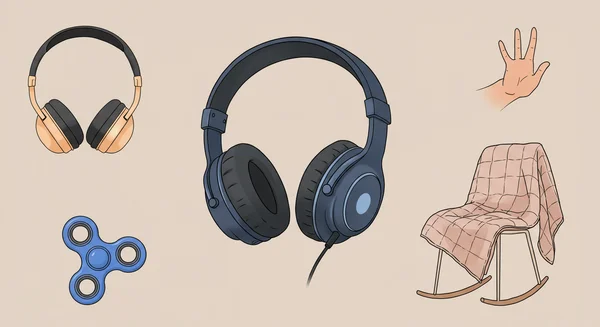
One of the most visible forms of sensory regulation is stimming (self-stimulatory behavior). This involves repetitive movements or sounds, such as hand-flapping, rocking, spinning, or humming. While often misunderstood, stimming is a natural and essential coping mechanism. It can help an individual calm down when overwhelmed, focus their attention, or express intense emotions like joy and excitement. It is a healthy and valid way to navigate a challenging sensory world.
Practical Strategies for Managing Sensory Aversion & Seeking
Managing a world that isn't built for your sensory needs requires a personal toolkit of strategies. For sensory avoidance, tools like noise-canceling headphones can create a pocket of peace in a loud environment. Sunglasses can reduce visual strain from bright lights. For sensory seekers, items like fidgets or chewable jewelry can provide safe and consistent input. Understanding these needs is a step toward creating a more comfortable life. If you're wondering if these behaviors are part of a larger picture, an asd screening test can be a helpful resource.
The 'Internal' Senses: Interoception & Proprioception in ASD
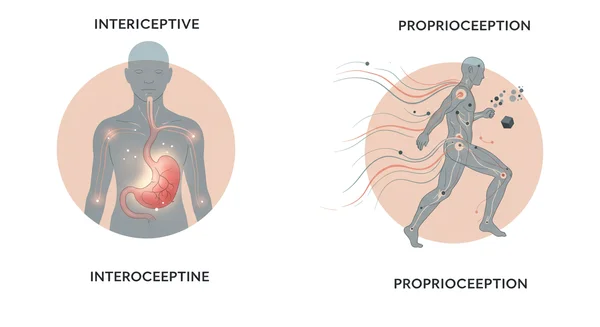
Beyond the traditional five senses, humans have lesser-known internal senses that are crucial for self-awareness and regulation. For autistic individuals, differences in these senses can have a profound impact on daily life. Two of the most important are interoception and proprioception. Understanding this aspect can provide deep insight into interoception ASD challenges.
Listening to Your Body: Interoception Challenges and Emotional Regulation
Interoception is the sense of our body's internal state. It tells us when we are hungry, thirsty, tired, or need to use the bathroom. It also plays a vital role in recognizing and processing emotions. Many autistic people experience interoception challenges, making it difficult to interpret these internal signals. This can lead to not realizing they need to eat until they are ravenous or not recognizing the physical signs of anxiety until it becomes overwhelming, contributing to emotional dysregulation.
Knowing Where You Are: Proprioception and Spatial Awareness
Proprioception is the sense of where your body is in space. It's how you can touch your nose with your eyes closed or walk without looking at your feet. For those with proprioceptive differences, this can manifest as clumsiness, difficulty with fine motor skills, or a tendency to use too much or too little force. To regulate this sense, individuals might seek deep pressure by using weighted blankets, enjoying tight hugs, or crashing into things. An at-home preliminary asd test can help you reflect on these more subtle sensory experiences.
Creating Sensory-Friendly Environments and Support
The goal is not to "fix" an autistic person's sensory system but to adapt the environment to better meet their needs. Creating sensory-friendly environments fosters a sense of safety, reduces anxiety, and allows individuals to thrive. Small, thoughtful adjustments at home, school, or work can make a world of difference, promoting inclusion and well-being. Further resources on creating inclusive spaces can be found on the Autism Society website.
Designing Supportive Spaces: Home, School, and Workplace Adjustments
Creating supportive spaces involves reducing sensory triggers and providing tools for regulation. This might mean replacing fluorescent bulbs with warmer, dimmable lighting, creating a designated "quiet corner" with soft furnishings, or establishing predictable routines to minimize uncertainty. In a workplace or school, this could involve allowing the use of headphones or offering alternative seating options. Acknowledging and accommodating these needs is a powerful form of support.
Essential Sensory Tools and Strategies for Daily Living
A variety of tools can help manage sensory needs throughout the day. A "sensory kit" might include fidget toys, noise-canceling headphones, sunglasses, a weighted lap pad, or unscented lotions. The key is to identify what provides comfort and regulation for a specific individual. Exploring these tools empowers autistic people to manage their own needs and navigate different environments with greater confidence. If you are exploring these needs for yourself or your child, you might consider taking a free asd test online for more structured insights.
Embracing Sensory Diversity: Towards Greater Understanding & Support
The sensory world of an autistic person is not broken or deficient; it is simply different. Understanding concepts like hypersensitivity, stimming, and interoception moves us beyond stereotypes and toward genuine empathy and acceptance. By recognizing that behaviors are often a direct response to sensory experiences, we can offer more meaningful and effective support. This shift in perspective is empowering for autistic individuals and enlightening for their families, friends, and colleagues.
This journey of understanding is unique for everyone. If what you've read resonates with your own experiences or your observations of a loved one, know that resources are available to guide you. A great first step can be to start your insightful test on our platform. It's a confidential, user-friendly screening tool designed to provide initial insights, not a diagnosis, helping you make sense of your traits and plan your next steps with greater confidence.
Frequently Asked Questions About Sensory Processing in Autism
How do sensory differences relate to signs of autism in adults?
In adults, long-standing sensory sensitivities are often a key indicator that may point toward ASD. An adult might realize they have always avoided crowded places, been particular about food textures, or felt an unexplained need for deep pressure. Recognizing these patterns as sensory differences, rather than just "quirks," can be a crucial part of the self-discovery process for those exploring an adult asd test.
What are the first signs of sensory processing challenges in children?
For parents, early signs in children can include extreme reactions to certain sounds or textures, an unusually high or low pain tolerance, or appearing clumsy. A child might also engage in sensory-seeking behaviors like constant spinning, chewing on non-food items, or crashing into furniture. An asd test for child screening can help organize these observations.
Can an online ASD test provide insights into my or my child's sensory profile?
Yes, a well-designed preliminary screening tool can provide valuable insights. While it is not a diagnostic instrument, an online ASD test like the one offered on our site asks questions that relate to sensory behaviors and preferences. The results can help you identify patterns and provide a structured summary of traits, offering a solid starting point for a conversation with a healthcare professional. Try our free tool to gain a better understanding.