ASD Test for Women: Unmasking Female Autistic Traits
Have you ever felt like you're playing a part, meticulously studying social cues that seem to come naturally to others? Many women on the autism spectrum spend their lives feeling different, yet their traits are often missed or misunderstood. This happens because autism can present differently in women, often masked by social camouflaging. If you're wondering, how do I know if I'm autistic?, this guide is a compassionate starting point for self-understanding. It explores the unique characteristics of autism in women and offers a path toward clarity.
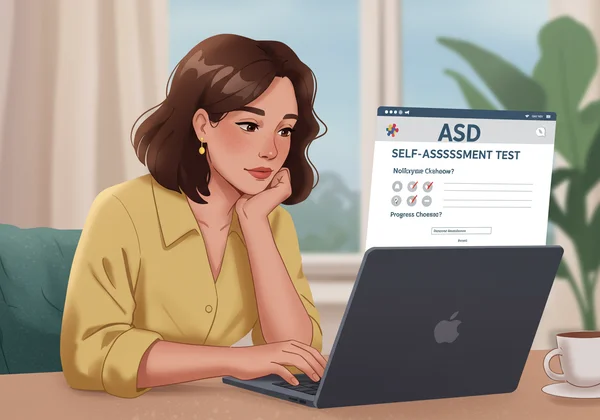
The journey of self-discovery can be complex, but you don't have to navigate it alone. Gaining initial insights can be an empowering first step. An online asd test can provide a structured way to reflect on your experiences. If you're ready to explore your traits, you can start your insightful test to get a preliminary overview. Remember, this is about understanding yourself better, not about a label.
Understanding Female Autistic Traits & Masking
One of the most significant reasons autism is overlooked in women is the concept of "masking" or "camouflaging." This involves subconsciously or consciously hiding autistic traits to fit in with neurotypical peers. While this is a common coping mechanism, it can be emotionally and mentally exhausting, often leading to a delayed understanding of oneself. Recognizing these specific presentations is key.
This journey of understanding often begins with a simple self-assessment. Exploring your characteristics through an asd screening test can provide a valuable frame of reference for your personal experiences and feelings.
What is Autistic Masking and Why Do Women Do It?
Autistic masking is the act of suppressing natural behaviors and mimicking the social behaviors of others. For women, who are often socialized from a young age to be agreeable, empathetic, and socially adept, the pressure to mask can be immense. This might look like forcing eye contact even when it's uncomfortable, scripting conversations in your head before they happen, or imitating the gestures and facial expressions of friends.
This constant performance is incredibly draining. It can lead to a disconnect from one's true self and a feeling of being an imposter. The motivation isn't to deceive; it's a survival strategy developed to navigate a world that often doesn't feel built for the autistic mind. It’s a way to build connections and avoid social rejection or bullying.

Internalized Struggles: Anxiety, Depression, & Emotional Burnout
When autistic traits are turned inward, they can manifest as other mental health challenges. Years of masking and suppressing sensory needs can lead to chronic anxiety, depression, and a state of profound exhaustion known as autistic burnout. This isn't just feeling tired; it's a complete shutdown of executive functions, often triggered by the cumulative stress of trying to meet neurotypical expectations.
Many autistic women are first diagnosed with anxiety or mood disorders because their internalized struggles are more visible than their underlying autistic traits. They might be described as "too sensitive" or "shy." Understanding that these struggles could be linked to an underlying neurotype can be a revolutionary step toward self-acceptance and finding the right kind of support.
Special Interests & Sensory Sensitivities in Women
Intense or "special" interests are a hallmark of autism. In women, these interests may not align with the stereotypical autistic interests (like trains or mathematics) and can often be more socially acceptable. For example, a deep passion for literature, psychology, animals, or a specific art form might be seen as a hobby rather than an autistic trait. The key is the intensity and depth of the interest, not the subject matter itself.
Similarly, sensory sensitivities are common but may be expressed subtly. An autistic woman might feel overwhelmed by the bright lights and noise of a supermarket, the texture of certain fabrics, or the feeling of a tag on her clothes. She may develop coping strategies, like shopping at off-peak hours or wearing specific "safe" clothing, that make these sensitivities less obvious to others.
The Reasons Behind Late Diagnosis Autism in Women
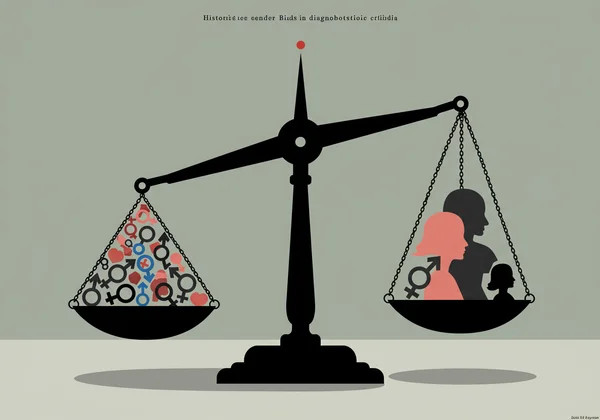
Why do so many autistic women and girls fly under the radar for so long? The answer lies in a combination of historical biases in research and deeply ingrained societal expectations. For decades, autism was viewed as a predominantly male condition, and diagnostic criteria were developed based on studies of boys. This created a cycle where women who didn't fit the male-centric model were left without answers.
A late diagnosis of autism can bring a mix of relief and grief—relief at finally having an explanation, and grief for the years spent struggling without understanding. If this resonates with you, an online asd test can be a gentle entry point into this exploration.
Gender Bias in Traditional Diagnostic Criteria
The classic understanding of autism was based on observations of young boys who often exhibited more externalized behaviors, such as visible repetitive movements (stimming) or clear social disinterest. Autistic girls, however, tend to have more internalized traits. They might have quieter, less noticeable repetitive behaviors and a strong desire for friendship, even if they struggle with the mechanics of social interaction.
This means that during a traditional assessment, a girl who makes eye contact (even if it's painfully forced) and has socially acceptable interests might not meet the criteria. This historical gender bias has led to countless missed identifications, leaving many women to navigate their challenges without a framework to understand them.
Societal Expectations & the Pressure to Conform
From a young age, girls are often taught to prioritize the feelings of others, to be peacemakers, and to suppress their own discomfort for the sake of social harmony. This social conditioning directly encourages masking. An autistic girl learns early on that her natural way of being—perhaps being direct in her communication or needing solitude to recharge—is not socially rewarded.
As she grows, this pressure to conform continues in school, work, and relationships. She becomes an expert at observing and analyzing social behavior, but this analytical approach, rather than an intuitive one, consumes a vast amount of mental energy. This constant effort is often invisible to others, who may only see a quiet, quirky, or perhaps anxious individual.
Key Signs to Look For: Is an ASD Test for Women Right for You?
If the experiences described above feel familiar, you might be wondering what specific signs to look for. The characteristics of autism in women are often subtle and can be easily misinterpreted. Recognizing these patterns in your own life is the first step toward self-understanding. Taking an asd test for women is a personal choice, but it can provide valuable data points on your journey.
An adult asd test designed with these nuances in mind can help you connect the dots between your lifelong experiences.
Subtle Social & Communication Differences
While social challenges are a core aspect of autism, in women they may not look like a complete lack of social skills. Instead, they might manifest in more nuanced ways:
- Social Exhaustion: Feeling completely drained after social interactions, even enjoyable ones, and needing significant time alone to recover.
- Analysis over Intuition: Consciously "studying" social rules, analyzing conversations after they happen, and feeling like you're always a step behind.
- Difficulty with Small Talk: Finding superficial chatter meaningless and preferring deep, one-on-one conversations about topics of interest.
- A Small Circle of Intense Friendships: Preferring a few close, loyal friends over a large group of acquaintances.
Patterns in Routines, Interests, & Sensory Processing
A preference for routine and predictability is another common autistic trait. In women, this might not be a rigid adherence to a schedule but a strong sense of distress when plans change unexpectedly. It can also manifest as a deep comfort found in repetitive activities or rituals.
As mentioned earlier, intense interests and sensory sensitivities are also key. Do you find yourself completely absorbed in a topic for hours? Do certain sounds, smells, or textures cause you genuine physical or emotional distress? These aren't just "quirks"; they are fundamental aspects of how an autistic brain processes the world. An at-home asd screening can help you formally reflect on these patterns.
Your Path to Understanding: Taking the First Step
Unmasking female autistic traits is a journey toward self-acceptance. It's about giving yourself permission to honor your needs, unlearn harmful coping mechanisms, and embrace your authentic self. Recognizing that your brain simply works differently can be incredibly liberating, providing a new lens through which to view your past struggles and future potential.
This exploration is deeply personal. If you see yourself in these descriptions, the next step is yours to choose. For many, a preliminary screening provides the validation needed to continue learning. Our user-friendly, private asd self test is designed to offer initial insights based on established principles. It is not a diagnosis, but a supportive and informative tool to help you on your path.
Ready to make exploration easier and life richer? Take the first step today and begin your journey toward insightful self-understanding.

Frequently Asked Questions About ASD in Women
How can I assess for female autistic traits?
Self-assessment often begins with reading articles like this one and resonating with the described experiences. A more structured approach is to use a preliminary screening tool. An online ASD test can guide you through a series of questions related to social communication, sensory sensitivities, and behavioral patterns, helping you see how your traits align with common autistic characteristics.
Is an online ASD test for women reliable as a first step?
Yes, as a first step, a well-designed online screening can be very reliable and insightful. It's crucial to choose a platform that is transparent about its purpose. Our comprehensive online ASD test is designed as a preliminary screening instrument, not a diagnostic tool. They provide a safe, private space to gather information and decide on next steps, such as seeking a professional evaluation. You can try our free tool to see how it works.
What are common signs of autism in adult women?
Common signs include a history of social exhaustion (especially after masking), intense and specialized interests, sensory sensitivities (to light, sound, or touch), a preference for routine and predictability, and a feeling of "being different" or not fitting in. Many also experience co-occurring anxiety and depression resulting from years of navigating a neurotypical world. A preliminary asd test can help you organize these observations.
How do I know if my traits suggest autism as a woman?
If you consistently relate to the subtle social differences, the need for recovery time after socializing, the depth of your interests, and your sensory experiences, it may be worth exploring further. It’s not about checking every box but about a persistent pattern of experience throughout your life. An initial screening can provide clarity and help you understand if your experiences align with the female autistic profile.