ASD Test for Teenagers: Screening Guide for Parents & Youth
The teenage years are a time of rapid change and social challenges. It can be difficult for parents and teens alike to distinguish between typical adolescent behavior and traits that might suggest something more. You might be wondering, "Are my teen's social difficulties or intense interests just a phase, or could they be signs of Autism Spectrum Disorder (ASD)?"
This guide is here to provide clarity and support. We will explore how ASD can present in adolescents, why early understanding is so important, and how a preliminary screening can be a helpful first step. At our platform, we offer a confidential and user-friendly way to gain initial insights. Our online ASD screening test is designed to help you organize your thoughts and prepare for a more informed conversation about the future.

Understanding Unique Teen Autism Signs Online
Autism in teenagers can look very different from how it appears in young children. The social world becomes much more complex, and academic pressures increase. For an autistic teen, navigating these changes can be particularly challenging, often in ways that are not immediately obvious to others.
What Are the Key Autism Traits in Teens?
While every individual is unique, certain characteristics are commonly associated with autism in adolescents. They often fall into a few key areas. Recognizing these can be the first step toward greater understanding.
-
Social and Communication Differences: A teen on the autism spectrum might find it difficult to "fit in" with peers. They often misinterpret sarcasm. They struggle with small talk. Unwritten social rules can feel impossible to grasp. They might prefer interacting with adults or much younger children, or find comfort in online communities where social rules are more explicit.
-
Intense or Specialized Interests: Many autistic teens have deep, passionate interests in specific topics. This can range from coding and video games to ancient history or a particular music genre. These passions bring great joy and expertise. But they can dominate conversations, making it hard to connect with others on different subjects.
-
Need for Routine and Predictability: Teenagers on the spectrum often thrive on routine and can become stressed or anxious when plans change unexpectedly. This desire for predictability helps them manage a world that can often feel chaotic and overwhelming.
-
Sensory Sensitivities: They may be over- or under-sensitive to sounds, lights, textures, or smells. A crowded school hallway might feel like a sensory assault, and certain clothing fabrics could be physically uncomfortable. This can lead them to avoid certain situations or environments.

Why Is Early Identification of Adolescent ASD Important?
Identifying these traits is not about applying a label. It is about unlocking understanding and providing the right kind of support. When a teenager understands why they experience the world differently, it can be incredibly validating and relieve years of feeling like they were somehow "wrong" or "broken."
Early identification can lead to:
- Improved Self-Esteem: Understanding that their brain is wired differently can help a teen build a positive self-identity and focus on their strengths.
- Better Mental Health: Many autistic teens experience anxiety or depression from trying to navigate a neurotypical world without support. Understanding can reduce this strain.
- Access to Support: It opens the door to academic accommodations, therapy, and strategies that are tailored to their unique needs, helping them thrive in school and beyond.
- Stronger Family Relationships: When parents understand the "why" behind their teen's behavior, it can foster empathy, reduce conflict, and improve communication.
Your Adolescent ASD Screening Test Journey
Starting this journey of exploration can feel daunting. That's why an online screening tool can be an invaluable resource. It's a no-stress way to check your thoughts privately from home, gather information, and see if your observations align with common autistic traits before deciding on the next steps.
How Our Online ASD Test for Teenagers Provides Insights
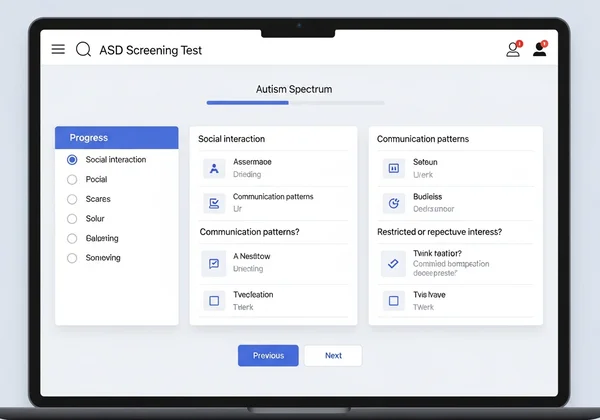
Our online ASD test is a preliminary screening tool. It is not a formal medical diagnosis. It is designed to be an accessible first step for both parents and self-exploring teenagers. Based on scientifically validated principles, the questionnaire guides you through a series of observations about social interaction, communication patterns, and behavioral traits.
After completing the questionnaire, you receive an instant preliminary summary. For those seeking deeper understanding, we offer a unique AI Personalized Report that provides customized insights into potential strengths, challenges, and practical suggestions. This can be an excellent resource for organizing your thoughts before speaking with a professional. The process is a simple, confidential way to start your test and gain clarity.
Getting Ready: Preparing for an Online ASD Screening
To get the most out of the screening, a little preparation can help. Whether you are a parent completing it on behalf of your teen or a teen exploring your own identity, a calm and honest approach is best.
- Find a Quiet Time: Set aside 15-20 minutes when you won't be interrupted. This allows for thoughtful reflection on each question.
- Answer Honestly: There are no right or wrong answers. The goal is to reflect on experiences and behaviors as accurately as possible. For parents, think about patterns you've observed over time, not just a single incident.
- Keep an Open Mind: Approach the screening as an information-gathering tool. Its purpose is to provide a structured perspective, not to deliver a definitive verdict.
Next Steps After Your Teen ASD Screening Results
Receiving your screening results is an important moment, but it's just one point on a longer journey. The results are a starting point for conversation and further exploration, helping you decide what to do next.
Interpreting Preliminary Findings for Autistic Teenagers
Your results will give you an indication of whether the traits you reported are consistent with those often seen in Autism Spectrum Disorder. It's crucial to remember this is not a diagnosis. A high score means traits are strongly present. It's time to seek a professional evaluation next.
Think of the results as a guide. They can help you articulate your concerns more clearly to a doctor or psychologist. Our AI Personalized Report can be especially useful here, offering detailed analysis that can enrich this conversation. To gain these initial insights, you can try our free tool at any time.
Seeking Support & Professional Guidance for Teenagers on the Spectrum
If your screening results suggest that further evaluation is warranted, the next step is to connect with qualified professionals. This is the only way to receive a formal diagnosis.
Here are some recommended actions:
-
Consult a Healthcare Professional: Start by speaking with your family doctor, pediatrician, or a psychologist. They can provide a referral to a specialist experienced in diagnosing ASD in adolescents.
-
Talk to the School: School counselors and special education departments can be valuable allies. They can provide information about academic accommodations and support available at school.
-
Find Community Support: Connecting with other families and autistic individuals can be incredibly empowering. Look for local or online support groups where you can share experiences and resources.
-
Focus on Strengths: Remember that autism is a form of neurodiversity with many unique strengths, such as intense focus, loyalty, honesty, and creative problem-solving. Support your teen in pursuing their passions.

Empowering Teenagers & Parents with Insightful ASD Understanding
Navigating the teenage years is complex, but understanding is power. Recognizing that your teen's challenges may be related to ASD can transform your perspective from one of confusion to one of empathy and effective support. An online screening is a simple, confidential, and insightful first step on that path. It helps you organize your observations and empowers you to take the next step with confidence.
Are you ready to gain a clearer understanding? Take the first step toward insight today. Start your insightful ASD test on our homepage.
Frequently Asked Questions About Teen ASD Screening
How do I know if my teenager might be on the autism spectrum?
Look for consistent patterns in their social interactions, communication style, interests, and need for routine. If they struggle significantly with making and keeping friends, seem to miss social cues, have very intense and narrow interests, or get highly distressed by changes in routine, these could be indicators worth exploring further.
Is there a reliable online ASD test specifically for teenagers?
Yes, online screening tools can be a reliable first step for gathering information. The test available on our platform is designed to provide preliminary insights for a wide age range, including teenagers. It serves as a structured guide to help you assess traits before seeking a formal, professional diagnosis. You can begin the screening on our website.
What is the difference between an online ASD screening and a diagnosis for teens?
An online screening is a preliminary tool that identifies the potential presence of autistic traits based on self-reported or observed behaviors. A formal diagnosis, however, is a comprehensive clinical assessment conducted by a qualified professional, such as a psychologist or developmental pediatrician. A diagnosis is required to access many specialized support services.
What should parents do after their teen gets an ASD screening result?
Use the results as a conversation starter. If the score indicates a high likelihood of ASD traits, the recommended next step is to schedule an appointment with a healthcare professional for a comprehensive evaluation. In the meantime, focus on supporting your teen's strengths and providing a validating, understanding home environment.