ASD Diagnosis Process: From Screening to Professional Assessment
You've completed an ASD screening and have your results—so, what comes next? The journey from initial screening to a professional diagnosis can feel overwhelming, filled with questions and uncertainty. Let's walk through each step of the diagnostic process together, so you can move forward with confidence and clarity.
This guide is for you, whether you're a parent seeking answers for your child or an adult exploring your own neurotype. Understanding the path ahead is the first step toward making informed decisions. While an online screening provides valuable first clues, it's just the beginning. Let's explore what that journey looks like and how to navigate it effectively. To gain your initial insights, you can always start your test on our platform.
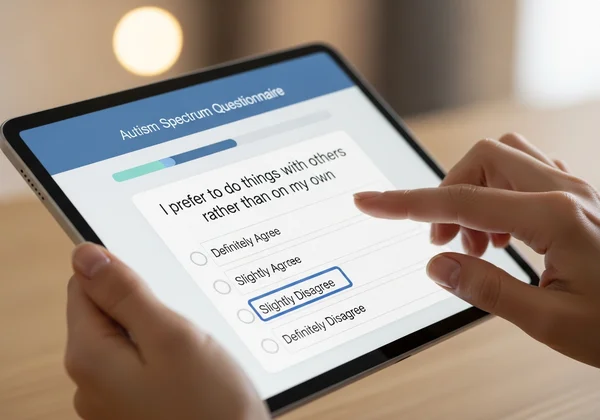
Your Next Steps After an Online ASD Test
Receiving the results from an online Autism Spectrum Disorder (ASD) screening can bring a mix of emotions: relief, validation, or even more questions. This is a normal and expected part of the process. The key is to use this information as a tool to guide your next actions, not as a final conclusion.
Understanding Your Screening Results
First, take a moment to understand what your screening results mean. Tools like our ASD screening test are designed to identify traits and behaviors commonly associated with ASD. They provide a score or summary that indicates whether you or your child show characteristics that align with the autism spectrum.
It is crucial to remember that this is a screening, not a diagnosis. A high score suggests that a professional evaluation might be beneficial, while a low score suggests that your observed traits may not be strongly indicative of ASD. The results are a data point—an important one—that can help you decide what to do next.
When Professional Evaluation Makes Sense
So, when should you seek a professional evaluation? Consider moving forward if:
- The screening results indicate a high likelihood of autistic traits.
- The traits are causing significant challenges in daily life, such as in social situations, at school, or at work.
- You are a parent, and your child’s teachers, pediatrician, or other caregivers have expressed concerns.
- As an adult, you have a long-standing feeling of being "different" and your screening results resonate with your life experiences.
Trust your intuition. If you feel strongly that an evaluation is needed, regardless of a screening score, it is always worth pursuing a professional opinion.
Preparing Your Documentation and History
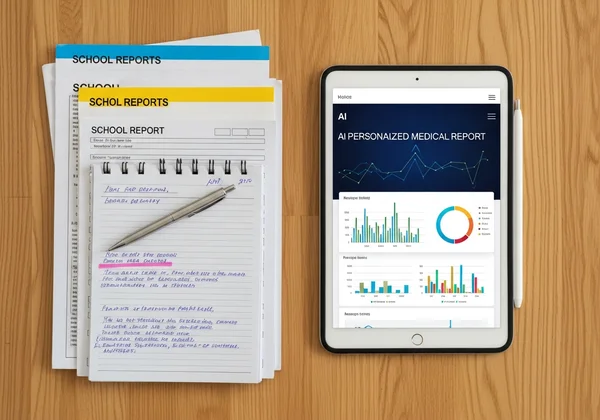
Before you seek a professional assessment, gathering information can make the process smoother and more effective. Start a file with key documents and observations.
For a child, this might include:
- School reports and teacher feedback.
- Notes from your pediatrician.
- Your own detailed observations about their social communication, interests, and behaviors.
For an adult, this could involve:
- Reflecting on your childhood experiences (social challenges, sensory sensitivities, intense interests).
- Journaling about current challenges in relationships, work, or daily routines.
- Collecting any previous evaluations (e.g., for anxiety, ADHD, or learning disabilities).
Having this information organized will provide a valuable foundation for your conversation with a specialist. For help organizing your observations before an assessment, download our ASD traits observation worksheet to track patterns over time.
Screening vs Diagnosis: Understanding the Critical Differences
Many people use the terms "screening" and "diagnosis" interchangeably, but they represent two very different steps in understanding ASD. Clarifying this distinction is essential for managing expectations and navigating the path to getting clear, actionable answers.
What Screening Tests Can and Cannot Do
An online ASD screening is a preliminary tool. Think of it like a vision screening at school—it can identify potential issues but can't prescribe glasses.
What screening tests CAN do:
- Identify potential traits: They use questionnaires to check for characteristics commonly associated with autism.
- Provide initial insights: They offer a quick, accessible, and low-stress way to explore possibilities.
- Empower you to take the next step: A positive screening can give you the confidence to seek a formal evaluation.
What screening tests CANNOT do:
- Provide a medical diagnosis: Only a qualified healthcare professional can diagnose ASD.
- Determine support needs: They cannot specify the level of support an individual might require.
- Qualify you for services: A screening result is not sufficient for accessing therapies, school accommodations, or other support services.
An online ASD test is an excellent starting point for your journey of discovery.
The Professional Diagnosis Process Explained
A professional diagnosis is a comprehensive evaluation conducted by a qualified clinician. Unlike a screening questionnaire, this process is much more in-depth. It typically involves several components:
-
Detailed Interviews: The clinician will talk with you (and your parents, if you are an adult) about developmental history, social interactions, and daily life.
-
Direct Observation: The specialist will observe behaviors and communication styles, often through structured activities.
-
Standardized Assessments: Tools like the ADOS-2 (Autism Diagnostic Observation Schedule) and ADI-R (Autism Diagnostic Interview-Revised) may be used.
-
Rule-Outs: The clinician will also consider and rule out other conditions that may have overlapping traits, such as ADHD, social anxiety, or developmental language disorders.

Leveraging Your AI Personalized Report Insights
If you've used a tool like our screening test, the AI Personalized Report can be incredibly useful here. Unlike a simple score, this report provides a deeper analysis of your specific strengths and challenges. Learn more about our AI personalized report feature to understand how it can support your diagnostic journey. You can bring this report to your appointment to give the clinician a structured, detailed overview of your experiences. It serves as an organized starting point for the diagnostic conversation, helping you articulate your observations and concerns more clearly.
Finding the Right Specialist for ASD Assessment
Finding the right professional is a critical step in the diagnostic journey. You need someone with expertise in autism who you feel comfortable with. Not all healthcare providers are qualified to diagnose ASD, so it's important to know who to look for.
Types of Professionals Who Diagnose ASD
Several types of specialists are qualified to conduct ASD assessments. The right one for you may depend on age (child vs. adult) and your location.
- Developmental Pediatricians: These doctors specialize in the development of children and are a common choice for pediatric assessments.
- Child and Adolescent Psychiatrists/Psychologists: These mental health professionals have training in developmental conditions.
- Clinical Psychologists/Neuropsychologists: Many specialize in diagnosing autism in both children and adults. They are often the primary resource for adult diagnosis.
- Neurologists: Some neurologists, particularly pediatric neurologists, also diagnose and treat ASD.
Questions to Ask Potential Providers
When you contact a potential provider, don't hesitate to ask questions to ensure they are a good fit. Consider asking:
- Do you have experience diagnosing ASD in [children/adults]?
- What does your assessment process involve?
- What standardized tools do you use?
- What is the estimated cost, and do you accept my insurance?
- How long is the waitlist for an evaluation?
Feeling confident in your chosen specialist is key to a positive diagnostic experience.
Regional Resources and Finding Local Support
To find specialists in your area, start by asking your primary care doctor or pediatrician for a referral. You can also contact national autism organizations (like Autism Speaks, the Autism Society, or your country's equivalent), which often have directories of local providers. University hospitals and local parent support groups are also excellent sources for recommendations.
Navigating Insurance and Financial Considerations
The cost of an ASD assessment can be a significant barrier for many families. Understanding your options for insurance coverage and financial assistance can help make the process more manageable.
Understanding Insurance Coverage for ASD Diagnosis
Insurance coverage for ASD evaluations varies widely by plan and location. Contact your insurance company directly to ask about coverage for "developmental testing" or "neuropsychological evaluation." Get specifics on what is covered, what your out-of-pocket costs will be (deductibles, co-pays), and whether you need a referral from your primary care physician. Be prepared to be persistent and take detailed notes during your call.
Low-Cost and Sliding Scale Assessment Options
If insurance coverage is not an option, don't lose hope. Many university-affiliated hospitals and psychology training clinics offer low-cost or sliding-scale assessments. These evaluations are often conducted by doctoral students under the supervision of a licensed psychologist and are a reliable, affordable alternative. Search for psychology departments at local universities to see if they offer these services.
School and Community-Based Resources
For school-aged children, the public school system can be a valuable resource. Under laws like the Individuals with Disabilities Education Act (IDEA) in the United States, schools are required to evaluate children suspected of having a disability that impacts their education. Contact your child's school and request an evaluation in writing. While a school-based evaluation may not result in a medical diagnosis, it can qualify your child for an Individualized Education Program (IEP) and necessary school supports.
Preparing for Your ASD Evaluation
Once you have an appointment scheduled, taking some time to prepare can help reduce anxiety and ensure the evaluation is as productive as possible. You’ve already done some of the work by gathering your documents and history.
Documentation to Bring to Your Assessment
Organize all the information you've gathered into a binder or folder to bring with you. This should include:
- Your screening results and the AI Personalized Report, if you have one.
- A list of your primary concerns and specific examples.
- Any school reports, medical records, or previous evaluations.
- Your notes on developmental history and current behaviors.
How to Prepare Your Child or Yourself
For a child, explain the appointment in simple, positive, and reassuring terms. You might say: "We're going to meet someone who wants to understand how you think and learn. You'll play some games and answer some questions."
For yourself as an adult, the main preparation is mental. Acknowledge that the process might be emotionally draining but that it's a step toward greater self-understanding. Allow yourself to be open and honest with the clinician. Remember, there are no right or wrong answers.
What to Expect During the Evaluation Process
An evaluation is not a single test but a process that can unfold over several hours or multiple appointments. It will involve talking, observing, and possibly some puzzle-like activities. The goal is for the clinician to get a comprehensive picture of your or your child's strengths and challenges. After the assessment is complete, you will typically schedule a feedback session where the clinician will discuss the findings, provide a written report, and recommend next steps.
Your Journey to Understanding Continues
Moving from an initial screening to a professional ASD diagnosis can feel like a long journey. It takes patience, self-advocacy, and kindness toward yourself along the way. Understanding each step empowers you to navigate the process with confidence and make the best decisions for yourself or your loved ones.
Remember, a screening test is a valuable first step that provides initial insights, but a formal diagnosis from a qualified professional is essential for accessing the right support and services. Use this roadmap as your guide, trust your instincts, and know that every journey of understanding is unique and worthwhile.
Ready to take that first step? Begin your journey of discovery with our free online ASD screening tool today.
Frequently Asked Questions About ASD Diagnosis
What is the difference between an ASD test and a diagnosis?
An ASD test, especially an online one, is a preliminary screening tool. It identifies traits that may suggest autism. A diagnosis, however, is a formal medical conclusion made by a qualified healthcare professional after a comprehensive evaluation. A diagnosis is required to access most specialized services and accommodations.
What should I do after getting my ASD test results?
After receiving your results, take time to review them. If the results from a tool like our preliminary ASD test suggest autistic traits, consider them a starting point. Your next step is to gather supporting documentation and decide if you want to pursue a formal evaluation with a specialist.
How do I know if I'm autistic?
While online tests and self-reflection can provide strong indicators, the only way to know for sure is to receive a formal diagnosis from a qualified professional, such as a clinical psychologist or psychiatrist. They can conduct a thorough assessment to determine if you meet the criteria for Autism Spectrum Disorder.
At what age can ASD be diagnosed?
ASD can be reliably diagnosed as early as 18-24 months by a specialist with expertise in early childhood development. However, many people are not diagnosed until later in childhood, adolescence, or even well into adulthood. It is never too late to seek an evaluation if you suspect you may be autistic.
How long does the ASD diagnosis process take?
The duration of the diagnostic process can vary significantly. It can range from a few hours in a single day to several appointments spread over weeks or months. Factors include the clinician’s approach, waitlists in your area, and the complexity of the evaluation needed.